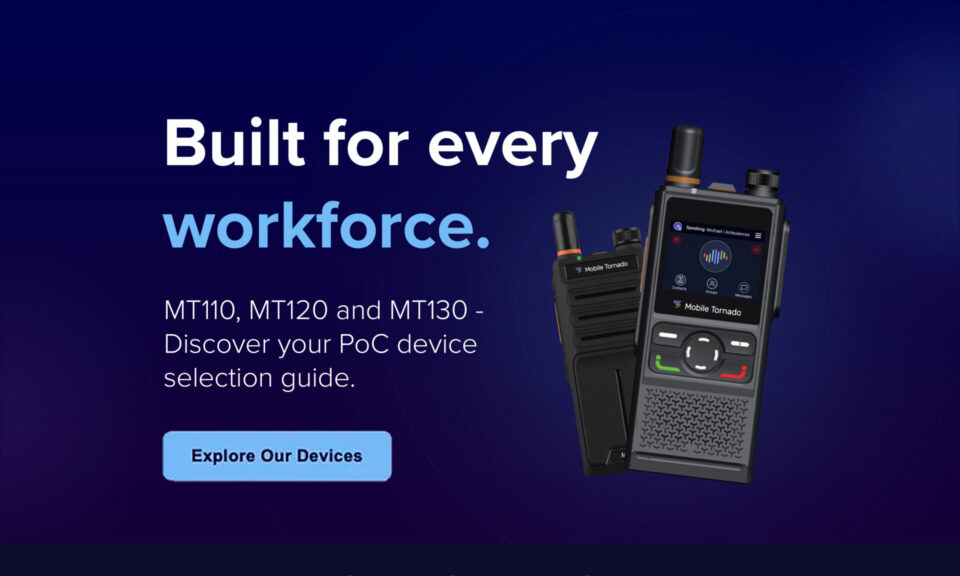
Which Device Fits Which Workforce?
Most PoC device conversations start in the wrong place. Customers — and sometimes partners — ask “which device is best,” as if there’s one right answer sitting in a spec sheet. There isn’t — and that’s the whole premise behind this PoC device selection guide: the better question is “best for what,” because a device that’s perfect for a warehouse picker is the wrong recommendation entirely for a fleet manager or a duty supervisor.
Mobile Tornado’s device range exists because workforces aren’t uniform. Here’s how the MT110, MT120 and MT130 map to three distinct jobs — and what actually separates them under the hood.
MT110 — for the person who just needs to press and talk
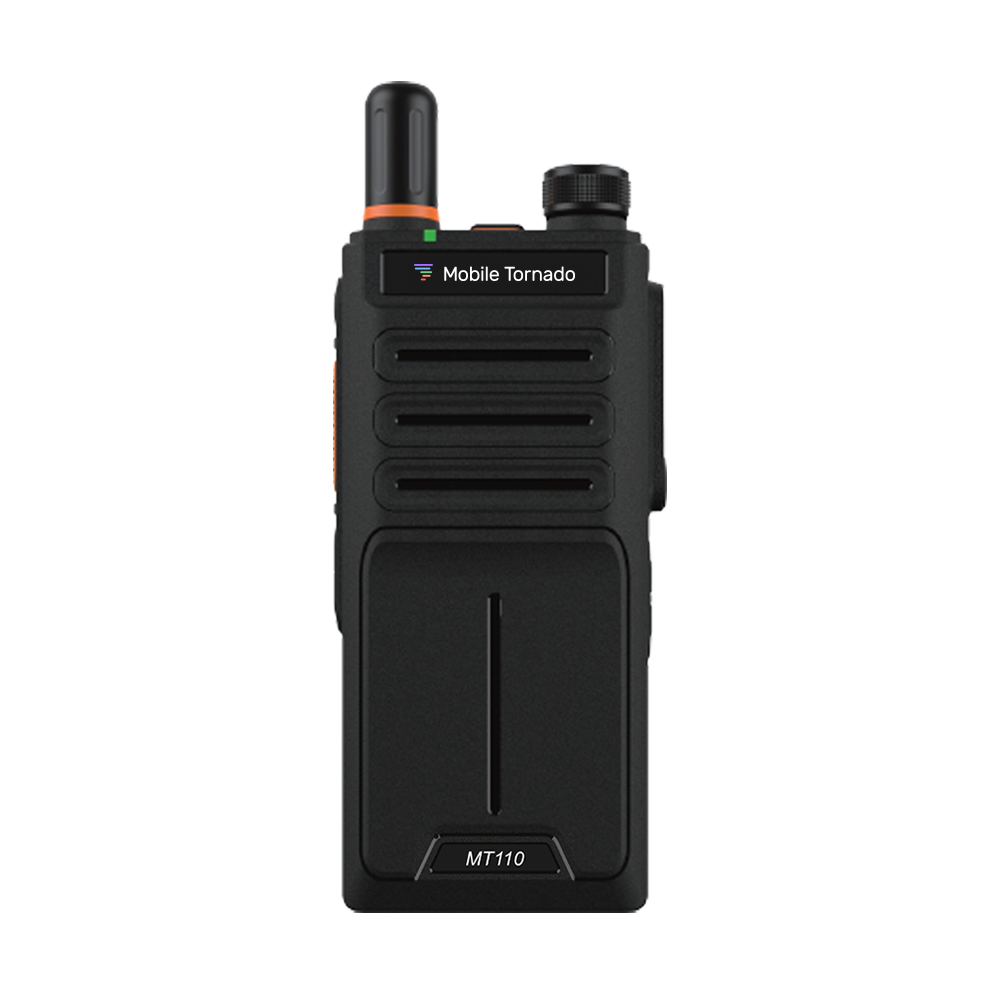
Not every role needs a screen. Security guards, retail floor staff, hospitality teams, warehouse pickers — anyone whose job is talking, not tapping — are better served by a device that gets out of the way. The MT110 is built around that idea: no display to glance at or crack, a dedicated PTT button, an emergency button, and two programmable buttons for whatever a customer’s workflow needs.
Where it earns its place in a pitch is audio. Dual-mic noise cancellation paired with a 3W radio-grade speaker makes it the clearest-sounding device in the range — the difference between a call getting missed on a loud platform or shop floor and one that doesn’t. A 4000mAh removable battery covers a full shift, and IP68 dust and water resistance plus a 1.5m drop rating mean it holds up to being dropped, rained on, or knocked around all day. Android 10 underneath keeps it compatible with your existing PTT app stack.
See the full MT110 brochure (PDF) for complete specs and accessories.
MT120 — for field leads who need visibility
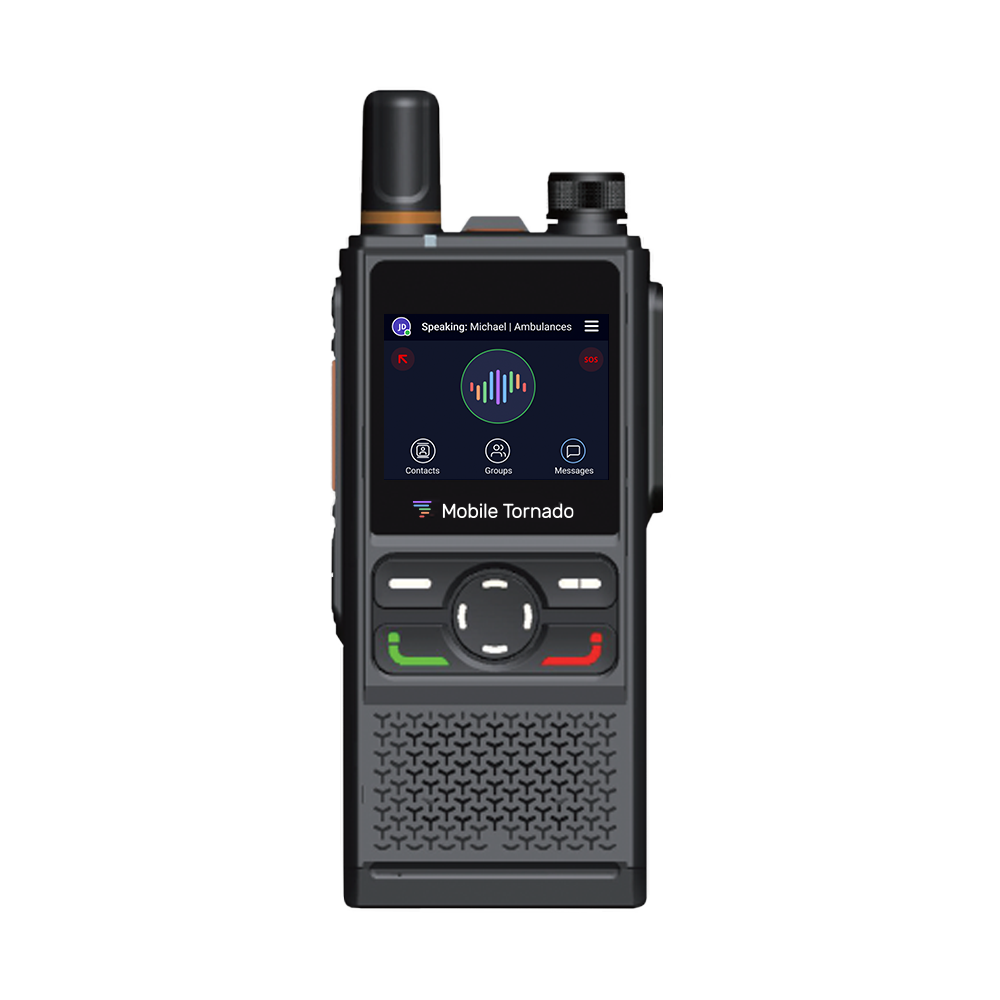
Supervisors and team leads need more than a talk button — they need visibility. The MT120 keeps the same rugged, handheld form factor as the MT110 but adds a 2″ touch display running Mobile Tornado’s PTX dispatcher interface, so a field lead can see who’s on a call, switch talkgroups from a dedicated knob, and message a dispatcher without picking up a second device.
The MT120 is API-ready for PTT applications, meaning it’s built to sit inside a customer’s own dispatch or workflow software rather than forcing them to work around a closed device. Dual SIM support adds carrier flexibility for customers who need network redundancy or multi-country coverage. It’s the same battery, audio and durability spec as the MT110 — this is the MT110’s core experience with a management layer added on top, not a different product line.
See the full MT120 brochure (PDF) for complete specs and accessories.
MT130 — for fleets and logistics teams who live in the vehicle
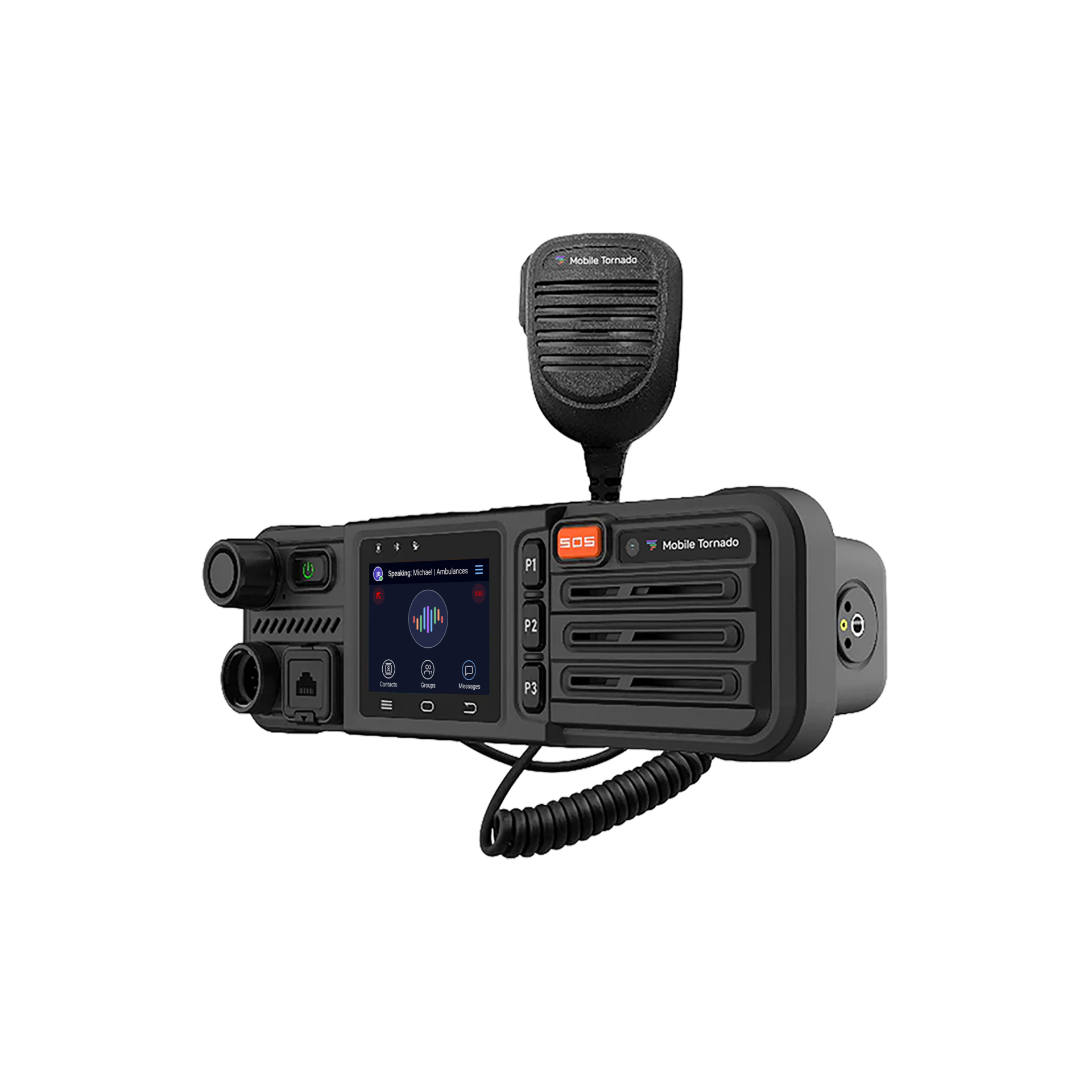
Handheld devices don’t suit vehicle-based roles well — batteries drain, devices go missing between shifts, and mounting a handheld safely in a cab is always a compromise. The MT130 solves this by not being handheld at all. It’s a permanently mounted vehicle terminal with a 2″ touchscreen, SOS key, and programmable buttons built into the housing, plus an aviation-style interface for palm mics, pedal PTT, or a desktop mic — the accessories fleet operators already expect.
The standout feature is automatic ignition power: the MT130 switches on with the vehicle and off with it, so there’s no battery to manage and no unit left running overnight. It supports full PoC PTT, a 5W speaker built to be heard over road and engine noise, and Android 12 — the newest platform in the range. IP54 dust and moisture resistance is lower than the handhelds, which makes sense: it’s protected by the vehicle it lives in, not carried through the weather itself.
See the full MT130 brochure (PDF) for complete specs and accessories.
PoC device selection guide: at a glance
Why the range matters for partners
The value of having three purpose-built devices rather than one generic handheld is that it turns a hardware conversation into a workforce conversation. Instead of positioning a single device and hoping it fits, a partner can ask a customer three questions – do your people need a screen, are they in a vehicle, and how loud is their environment – and land on the right recommendation the first time. That’s fewer mismatched deployments, fewer support calls asking why a handheld battery doesn’t last a 12-hour driving shift, and a stronger renewal conversation because the device actually fits the job. It’s also the whole point of working through a PoC device selection guide before the sale, not after it.
For more on partnering with us, see our guide on becoming a Mobile Tornado reseller.
